
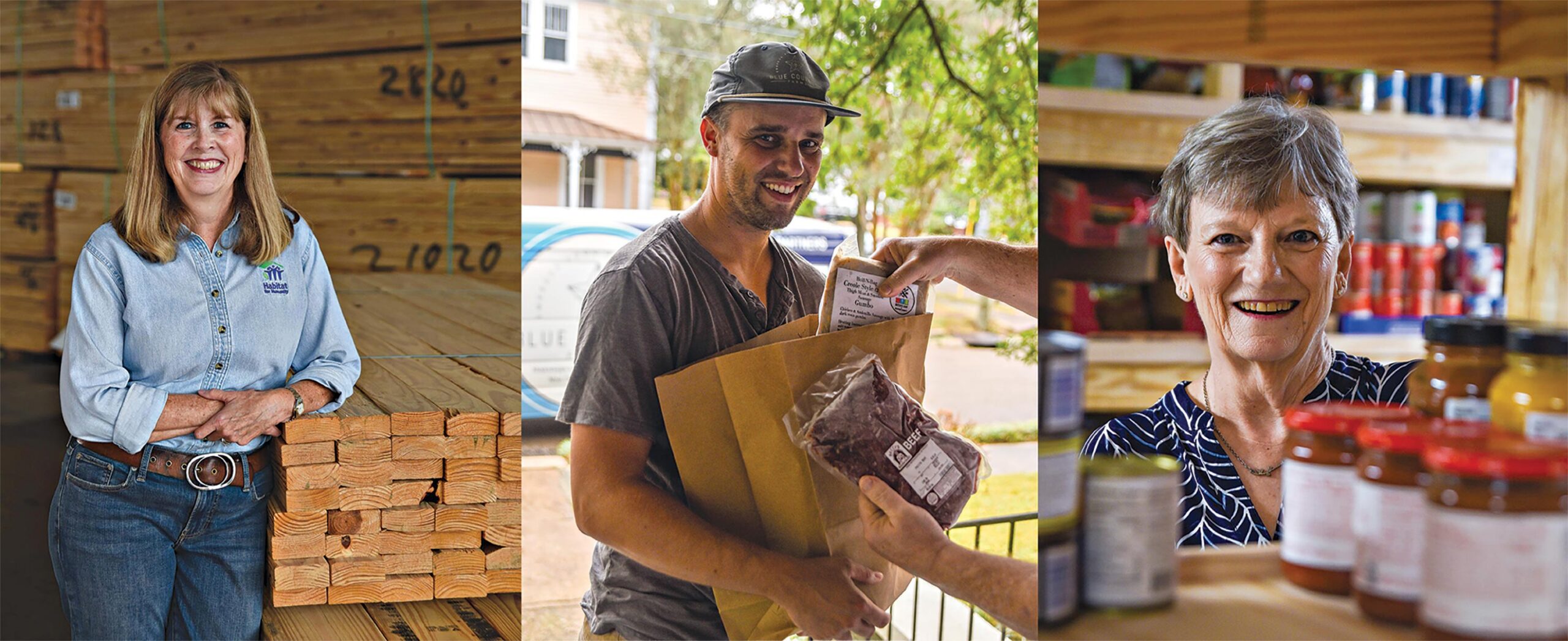
In every community, there are those among us who lead by quiet example. They seldom hold positions of power, nor do they have a title or any official designation that distinguishes them from their neighbors. Yet they are often the ones who, having found their own inspiration, serve to make us better people and a better community. The spark of imagination they ignite through the pursuit of their own dreams, passions and curiosity can spread down the street, through a neighborhood, across a community. Their stories are an inspiration and in the telling of their stories, others may be similarly inspired. In each edition, Progress tells the story of three of the “Inspired People” of our community.
Profiles by Slim Smith
Photos by Deanna Robinson
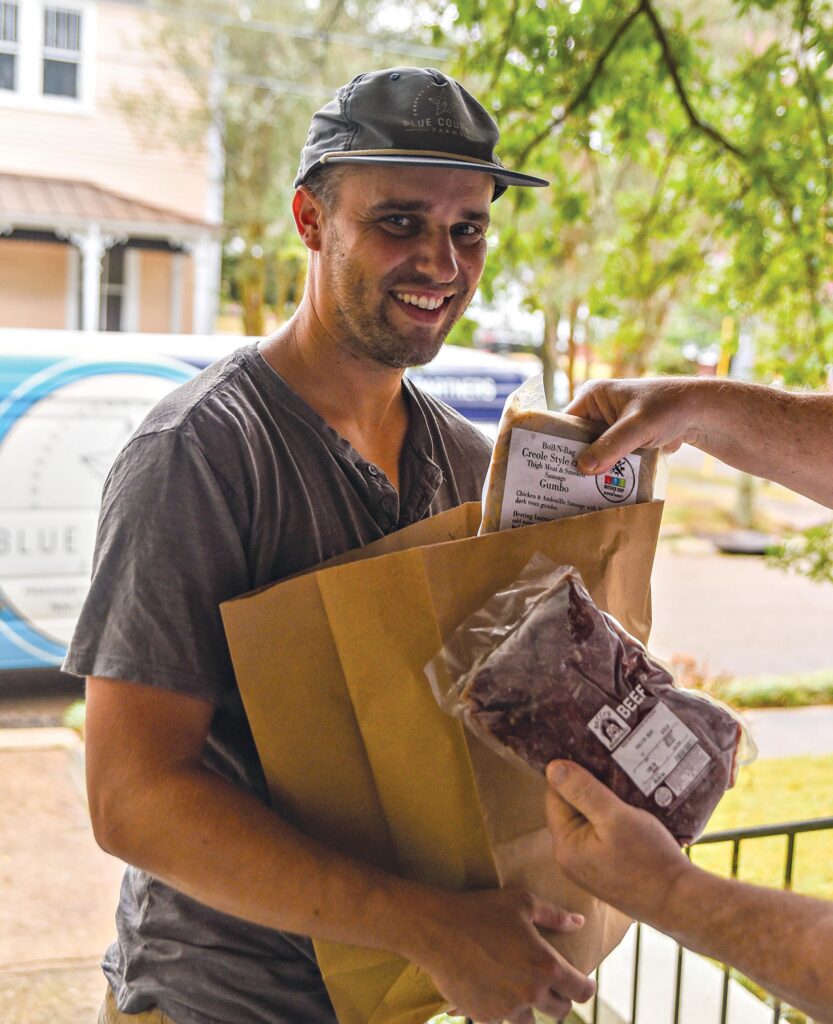
Pierce Moore
When you hear Pierce Moore’s story, it sounds a lot like the plot on the old sitcom “Green Acres.”
In that show, Oliver Douglas abruptly leaves his job as a big city attorney to try his hand at farming on a run-down farm in Hooterville.
In the true story, Moore left his job as a promising vice president at a prestigious investment bank to start farming at the Brooksville farm his family had owned since the 1850s.
“It’s funny,” says Moore, 40. “When my friends in investment banking heard about it, they asked me what in the world I was doing. The people here in Brooksville wonder what I’m doing, too. Did I lose my job or something?”
From Moore’s point of view, it’s a natural transition.
As an investment banker, he was making money. What he wasn’t making was a difference.
During COVID, Moore and his wife, Jaime, began to think of a different life, one that revolved around farming, which Moore described as a more authentic life.
“It’s like that Bible verse about living a quiet life and working with your hands to win the respect of others,” he said.
In 2021, Moore started out intent on focusing his full attention on mushroom farming, but soon saw a way to make a much greater impact by partnering with other farmers who share Moore’s farming philosophy that focuses on food sovereignty. Food sovereignty is the right for people to have access to healthy, locally-produced food that is produced though ecologically sound, sustainable farming methods.
Today his Blue Courage operation grew into partnerships with about 30 farms in Mississippi and Alabama, with Moore providing the marketing and logistics to get their foods to customers’ doorsteps.
It’s kind of like the Amazon of healthy locally-produced foods. Moore delivers the products ordered from his partner farms online and delivers it to the customer’s doorstep, all within 48 hours.
His plans also include starting a truck operation based on the food truck model.
Now three years into his business, Moore said his advice for entrepreneurs is simple.
“Pay attention to the little things and be consistent,” he said. “Everything isn’t going to go exactly how you planned it, but stick with it. I’m not the smartest guy around, but I am tenacious.”
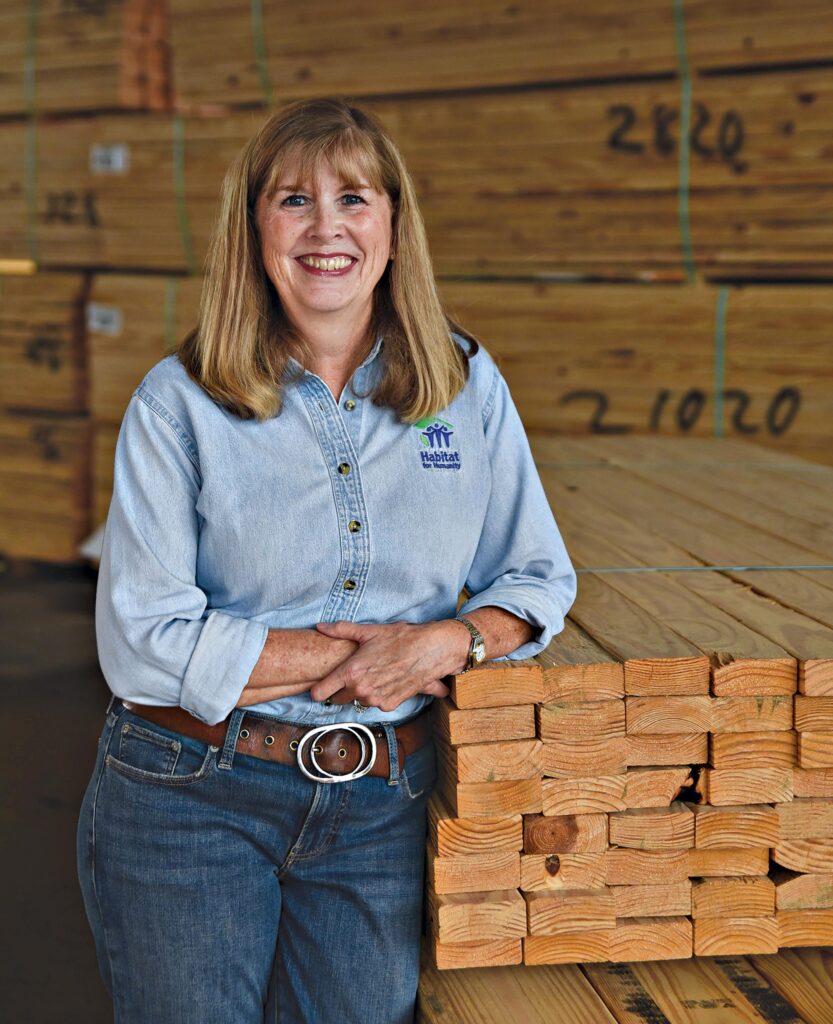
Kathy Arinder
When Jackie Hager announced she was retiring from her position as executive director of the Columbus Habitat For Humanity, Kathy Arinder figured her “dog-eating” days were behind her.
“At the time, I had always been in real estate,” Arinder said. “It’s sort of a dog-eat-dog job, so when I heard there would be an opening at Habitat, I really thought it would be something I would enjoy.”
Arinder knew Hager and many of the Habitat board members. Her father had served on the Habitat board, so she was already familiar with the organization and eager to be a part of it. “The more I learned about the job, the more I wanted it,” she said.
Arinder, 64, became executive director in April 2007 and remains as enthusiastic about her job and the work of Habitat as she was the day she began work there 18 years ago.
“There are so many things I like about the job, starting with all of the people I work with, our volunteers and our board. But for me, the part I liked best was putting people in homes who had never owned a home before. Every time it happens, it’s such a blessing.
Although she had kind of lost track of the actual number, Arinder said Columbus Habitat has built between 25 and 30 homes during her tenure.
“Every one of those homes has a really special and unique story, “ Arinder said. “ I guess the one that stands out the most came in my second or third year. We had a family that came in who had six children and had adopted six more. That’s a family of 14. We built a six-bedroom home, which at the time may have been the biggest home Habitat had built anywhere.”
“The other one that sticks out was the home we built in nine days,” Arinder said. “Habitat had what they called a blitz build where you build a house really quickly. It seemed like a neat idea. We worked with Fairview Baptist on that one.”
Arinder said the home built for a woman and dedicated to her on her 90th birthday is a special memory, as is home built for a special needs client name Joy, who calls Arinder every September to remind her how many years she’s been in the home.
In truth, every home is unique and so is the owner’s story, Arinder said.
They have also proven to be excellent homeowners, Arinder said.
“We have about 20 who have paid off their mortgages and one their home outright,” she said. “I think we’ve only had one foreclosure and that was because the owner died and there were no family members to take it over.”
Arinder said another point of pride is the Habitat ReStore, located on Gardner Boulevard. The ReStore sells donated building materials and furnishings.
“We just had our 10th anniversary there,” Arinder said. “That was one of those things where we had to step out in faith because it was all new to us.”
The main purpose of the store was to generate money for Habitat’s operations. While it has achieved that goal, Arinder began to see another purpose.
“We have been blessed time and time again with some many donations, some very nice things,” she said.
A lot of those donations were things that belonged to a loved one. That’s hard to do sometimes, so we know it’s special. We treat it special and want to see that those things go to people who will love them, too. I’ve come to see that as a mission, too.”
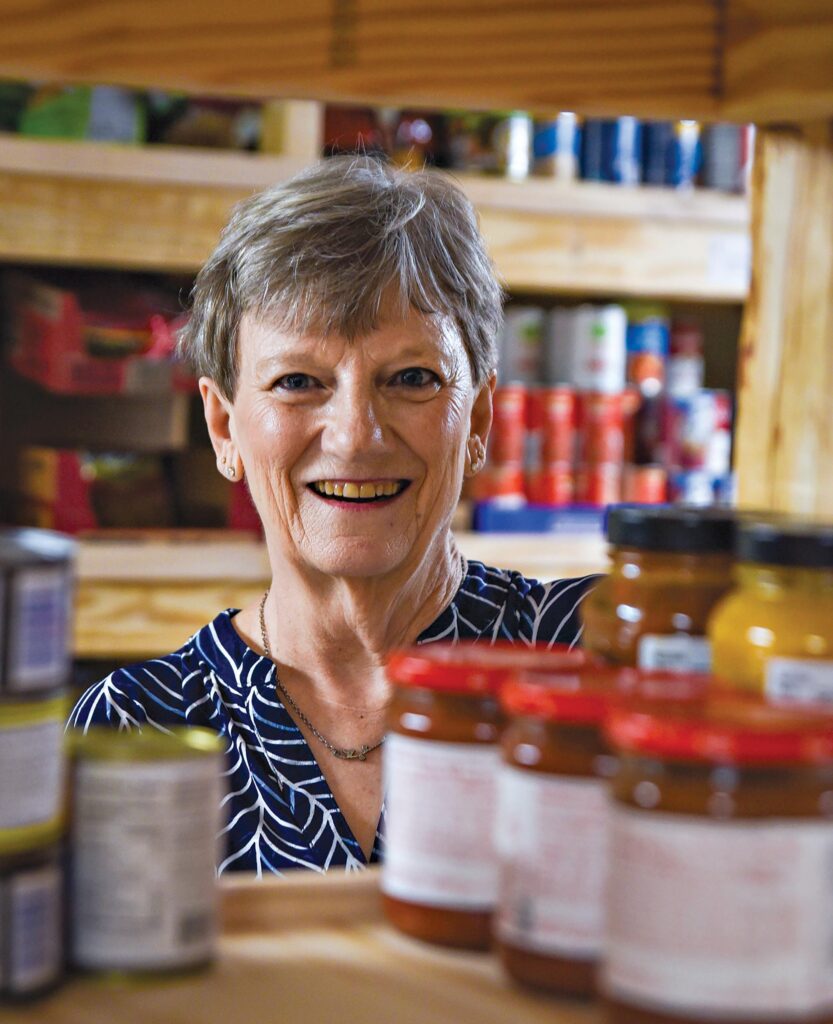
Cherri Lightsey
A week after she had knee replacement surgery Cherri Lightsey didn’t know how long her recuperation would take. What she does know is that however long that is, it will be entirely too long.
“I’m not good at sitting around,” said Lightsey, 61. “I’m one of those people who has to be busy.”
What Lightsey has been most busy with is volunteering, something she poured her energy into after retiring 10 years ago.
“I just know that for me, this is what I’m supposed to be about,” she said. “It’s what I love.”
Whether it’s working on the many service projects of First United Methodist’s women’s service group in Starkville or helping with Starkville Strong’s Neighbors Helping Neighbors or Second Servings, Lightsey seems to always be in the middle of the action, if not the spotlight. She shies away from attention, believing that the focus should be on the work, not the worker.
Lightsey worked for 38 years on the staff of Dr. Ken Parvin, who specialized in breast cancer surgery. As a two-time cancer survivor, she knew the importance of mammograms, something that wasn’t covered by Medicaid until 2014.
“I think the mammograms cost maybe $50 or $75, which doesn’t seem like much, but it is for low-income women. It was pretty disheartening to see women with advanced breast cancer that could have been detected by mammograms. So that became a crusade for me.”
Lightsey started a fund to pay for mammograms for low-income women in 2006, a fund that still provides breast-care funds for women.
Lightsey was also one of the people who helped establish Starkville’s Habitat for Humanity in 1986 as one of two representatives working with the national organization to establish the local chapter.
“That was really one of the first things I worked on in the community as a member of the First United Methodist women,” Lightsey said. “Mostly, I helped with family selection and with finance and fundraisers.”
Lightsey was a member of Habitat’s board of directors for 12 years.
When Brandi Herrington and a few friends started Starkville Strong in 2020, Lightsey took notice.
Starkville Strong was founded as a community action group. When the group began expanding its efforts to address food insecurity, homelessness and housing instability – issues close to Lightsey’s heart – she reached out to see what she could do, which turned out to be plenty.
“Cherri was the one who came along and helped us get Neighbors Helping Neighbors off the ground,” Herrington said. “It’s an event where we allow participants to shop for what they need free of charge from our grocery store set up. She had contacts with United Produce, which began providing fruits and vegetables for the program. That was huge for us.”
Likewise, Lightsey used her contacts to bring local restaurants into Starkville Strong’s Second Servings program, which partners with local restaurants, community organizations, Greek life organizations at Mississippi State University and others to redistribute surplus food to people who need it.
“That’s the thing that’s really impacting me now,” Lightsey said. “Once a week, I was helping pack food for Second Serving on Thursday morning. So I’ve got to get this knee working so I can get back to work.”