
In every community, there are those among us who lead by quiet example. They seldom hold positions of power, nor do they have a title or any official designation that distinguishes them from their neighbors. Yet they are often the ones who, having found their own inspiration, serve to make us better people and a better community. The spark of imagination they ignite through the pursuit of their own dreams, passions and curiosity can spread down the street, through a neighborhood, across a community. Their stories are an inspiration and in the telling of their stories, others may be similarly inspired. In each edition, Progress tells the story of three of the “Inspired People” of our community.
Profiles by Slim Smith
Photos by Deanna robinson
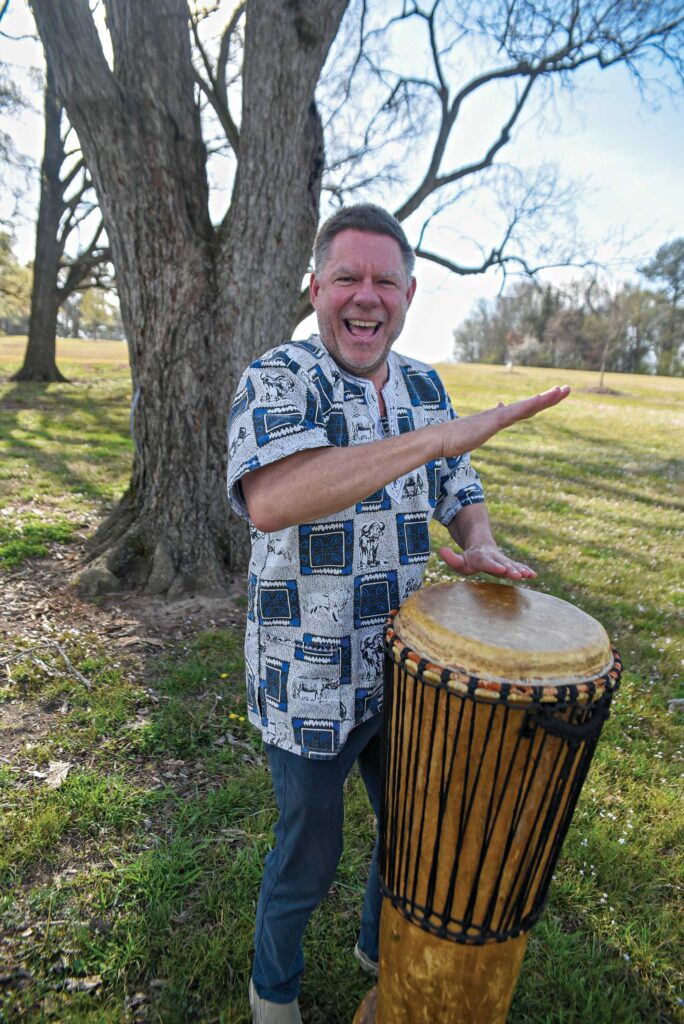
Robert Damm
The way Dr. Robert Damm figures it, there are two types of people: drummers and people who don’t know they are drummers.
He should know. Damm has been playing drums for 51 years and teaching percussion as a music professor at Mississippi State for 30 years.
“You hear people say they can’t play because they don’t have any rhythm,” Damm said. “What I have found is that is not true. Everyone has rhythm. Some just don’t realize it.”
As Damm sees it, saying you have no rhythm is like saying you can’t breathe air.
“Rhythm is everywhere, all the time,” Damm said. “We live in a world of rhythms. Our daily routines are rhythms. Part of my responsibility is to remind people that rhythm is who we are and how to use it to make connections with others.”
Damm’s credentials as a performer, teacher, researcher, essayist and ambassador in the world of percussion are impressive.
His recitals feature world music instruments, including African xylophones, berimbau, cajon, congas, djembe, darbuka, frame drums and steel drums along with styles played on marimba, vibraphone, timpani, multiple-percussion, and drum set. He studied music and culture in Cuba, Ghana, and Mali. He has published articles on drumming’s effect on children with autism, the jembe in Mali, Mississippi hill country fife and drum, New Orleans’ bamboula rhythm, among many other genres.
He is a longtime member of the Percussive Arts Society, which has chapters in all states and 25 other nations currently serving as the editor for PAS publications.
Locally, people may recognize him as a freelance drummer in blues, jazz and rock bands.
But he is probably most recognized around the Golden Triangle for leading the West African percussion ensemble Jembe Den, more commonly known as drum circle. Damm and his ensemble of students play at cultural and educational programs throughout Mississippi.
Their performances have been wildly popular, helping raise awareness of African music and culture, something Damm approaches with both enthusiasm and reverence.
“I don’t want this to be something appropriated from the cultures they originate from,” Damm said. “The instruments and the styles and rhythms I use were given to me through deep and meaningful relationships developed over years. That allows me to be a culture bearer through the lessons I share with our community.”
Damm said drum circles are best when they complement poetry and storytelling of theme, culture or issue. He plans his drum circles’ repertoire to accurately reflect the occasion.
Although the world of percussion music is incredibly diverse, Damm said they all have at least one thing in common.
“It’s joyful,” Damm said. “Across cultures, drums are part of celebrations, a birth, a good harvest, all the things that bring us together to celebrate.”
In addition to his duties as a professor, Damm teaches a drum circle every Monday morning open to all MSU students. He also teaches drum circle two nights a week at Backstage Music Store in Starkville.
For those who want to learn more about drumming and drum circles in particular, :Damm said there are a great variety of clubs and organizations on social media. He particularly recommends visiting the Percussive Arts Society at pas.org.
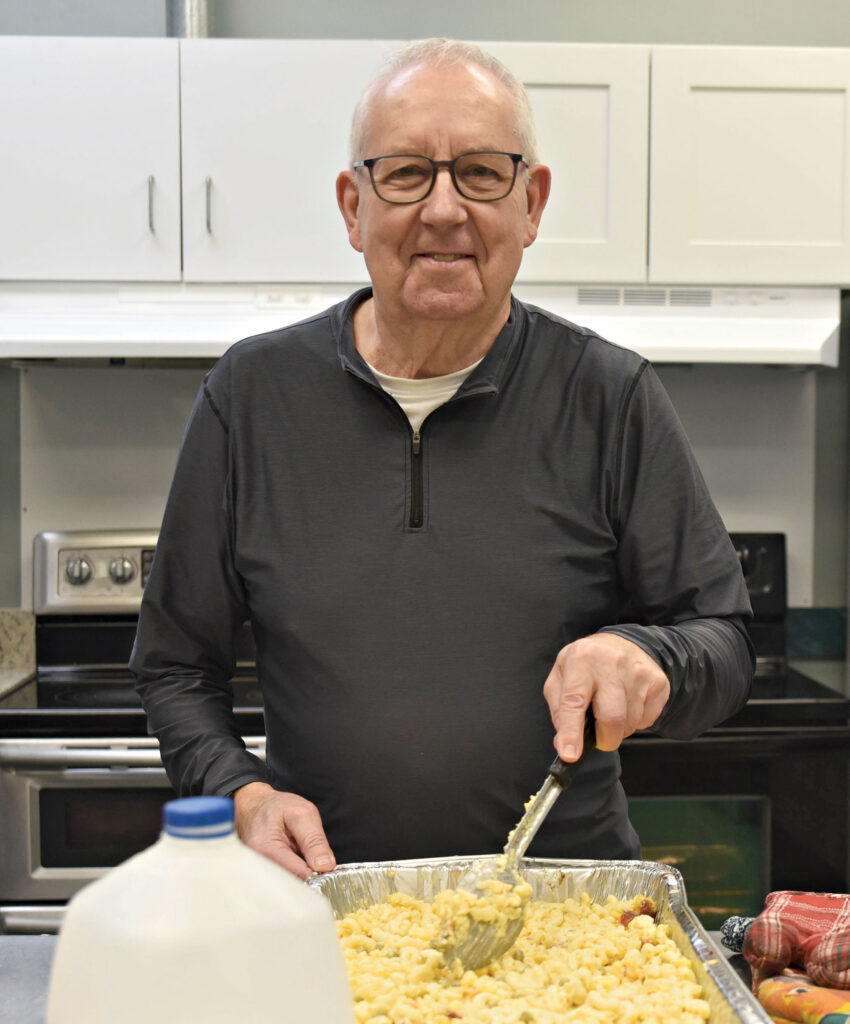
Steve Greenough
What was supposed to be a six-month visit to Columbus turned out to be permanent residency for Steve Greenough, much to the pleasure of his friends and the benefit to a pair of local charities.
“There’s a saying, ‘If you want to make God laugh, tell him you have a plan,’” Greenough said. “That’s me. I had all these plans, none of them including staying here.”
Greenough, a native of Bolton in northwest England and an engineer by profession, moved to Columbus in 1993 to help with installation of some equipment for Don DePriest. He remained in Columbus, managing DePriest’s business until 2008, when he moved to Arizona in hopes that a dry climate would be better for his wife, who was in poor health. In 2018, he retired to become his wife’s full-time caregiver. She succumbed to cancer after a three-year battle that left Steve emotionally and spiritually drained.
“After she passed, I decided to come back to spend time with my church family,” Greenough said. “It was comforting to me to be with people who loved her. I planned to stay about six months.”
During his “visit” Greenough began volunteering again at St. Vincent de Paul, something he had started doing in 2003 but had given up when he moved to Phoenix.
He also started volunteering at Loaves and Fishes, which provides meals for those in need through a group of church volunteers who take turns providing the meals. Greenough volunteered when his church – Annunciation Catholic Church – took its turn for a week in 2019.
“I’ve been boots on the ground ever since,” Greenough said. “For me it’s Monday through Friday, every week.”
Greenough’s devotion to Loaves and Fishes led to a spot on the nonprofit’s board. He’s been gratified to see how much the program has grown over those years.
“In 2021, we served 44,000 meals,” he said. “In 2022, it was up to 67,000 then to 84,000 in 2023. We’ve stayed in that 84,000 to 86,000 range ever since. We went from serving 90 to 100 meals a day to as many as 400.”
Greenough, 77, said his work with Loaves and Fishes and St. Vincent de Paul is distinctly different.
“I’m mostly behind the scenes at Loaves and Fishes,” said Greenough, who handles logistics of the program, including coordinating donations from Walmart, Chick-fil-A and Longhorn Steakhouse, which are used to supplement the food provided by the churches.
At St. Vincent de Paul, it’s more hands-on, more personal.
“I visit homes to find what they need,” Greenough said. A lot of them have nothing. Whatever it is, beds, furniture, I try to get it for them.”
Although his roles at the two nonprofits are different, the motivation is very much the same.
“It’s doing the work of Jesus,” Greenough said. Jesus fed people. So do we. It’s not means-tested. Anyone who turns up gets a meal. No one is turned away.
“At St. Vincent de Paul, it’s amazing to be able to sit down and talk to somebody who has no visitors at all and listen to them talk about their life. It’s so rewarding, in a wonderful kind of way.”
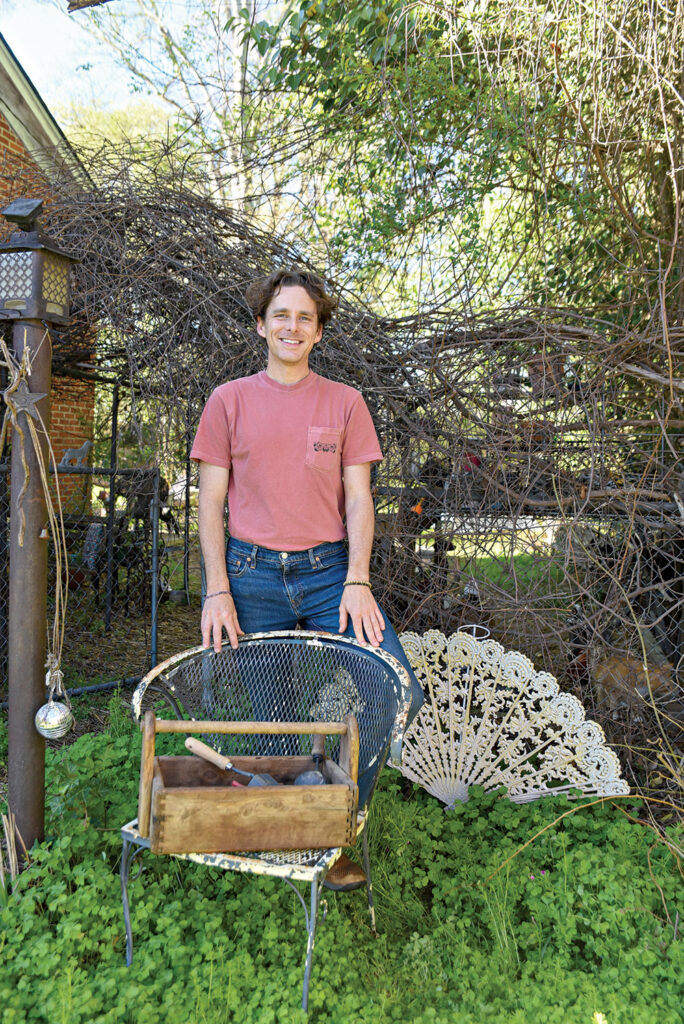
Michael Williams
If Michael Williams ever produces a film about his second career as a gardener/herbalist, there is an obvious title: “How Michael Got His Groove Back.”
Williams began making short films in 2004 as a high school student at Oak Hill Academy in West Point. Since then he has produced, written, directed and filmed everything from feature films to documentaries to music videos with his own production company.
“I went from Legos to filmmaking,” says Williams, 38. “Making films was always what I wanted to do.”
The life of an independent filmmaker is filled with highs and lows, successes and disappointment.
In 2023, after 20 years in the film business, Williams found himself running low on enthusiasm.
“That year was just a really bad year for filmmaking,” he said. “I lost a lot of work and didn’t have a lot to do. I was burned out on films.”
As many people do, he turned to gardening as therapy.
“For me, gardening was a way to recover, to get my creativity back,” he said. “I just needed to take a step back.”
What Williams didn’t anticipate is that gardening would go from therapy to a second career.
“I didn’t really have any experience,” Williams said. “ Honestly, I avoided vegetables or anything green until my late 20s. I had a bad relationship with food.”
Gardening as a distraction soon began to fire his imagination.
An important part of filmmaking is removing anything that doesn’t have a purpose. Naturally, he applied that discipline to gardening.
“My whole method is that everything has to have a reason.” He said. “It has to make sense to me. Everything I grow has to have a purpose. I wanted to learn how to plant things that had a purpose for me which was the same way I learned filmmaking.
In just three years, Williams has emerged as a leading influence for gardening in the Golden Triangle. His website, The Great Catsby Herb Cartel (a nod to his two cats)., has been a sales platform for his gardening which focuses heavily on herbal teas, skincare products and seasonings.
He has also shared what he has learned through workshops entertaining visitors to his home garden in West Point.
Williams said gardening is more than therapy or even a side business.
“I do think there is a spiritual component to it,” he said. “I think it has the power to change people, I really do.”
Lots of people speak to their pants. Williams is convinced, this plants talk to him.
“I do believe they are sentient beings,” he said. “They can tell you things. They can teach you things.”
When Williams returns to filmmaking, that’s a story he wants to tell.
“ The things I am currently getting inspiration from, these living experiences will one day be a good subject for a movie,” said Williams, who is well on his way to getting his groove back.”